Learn Stand Up Paddling: 5 Tips for SUP Beginners
Stand up paddling (SUP) is more than just a trend—it's one of the most accessible water sports around. Whether you want to exercise, relax, or enjoy nature from the water: SUP offers all of this in one. You don't need any previous experience—just a bit of balance, the right equipment, and a few know-how basics. Here are 5 important tips from our SUP expert Valentin for anyone who wants to get started with SUP.
What Is Stand Up Paddling and Why Is It Suitable for Beginners?
Stand up paddling (SUP) is a water sport in which you stand on a special board and move forwards with a paddle. Originally from Hawaii, SUP has now established itself as a popular leisure activity—on lakes, rivers, and even the sea.
SUP is suitable for: Fitness & full body workout; Relaxation & mindfulness; Enjoying nature & outdoor adventures; Family activities & beginners of all ages.
As it is easy to learn and requires no previous experience, it is also suitable for beginners.
The Right Equipment for SUP Beginners
The right basic SUP equipment will make your entry into SUP sport safer and much more enjoyable. Our SUP expert Valentin explains what equipment you need:
The Right SUP Board
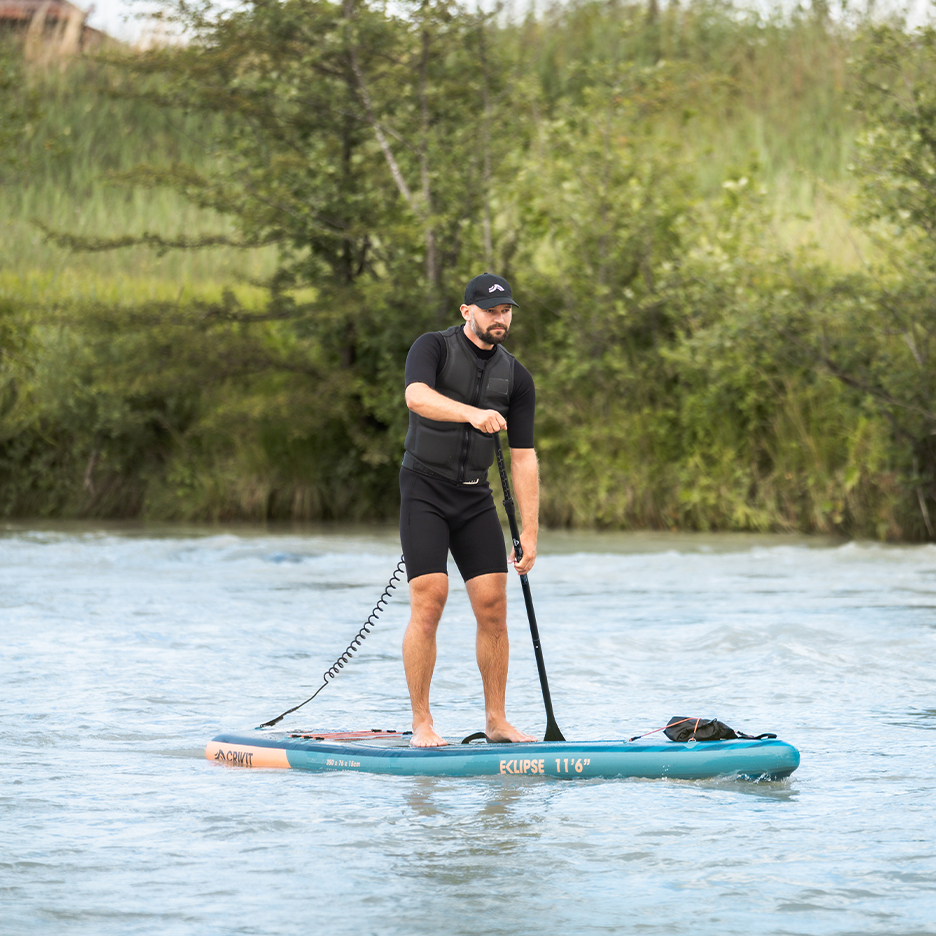
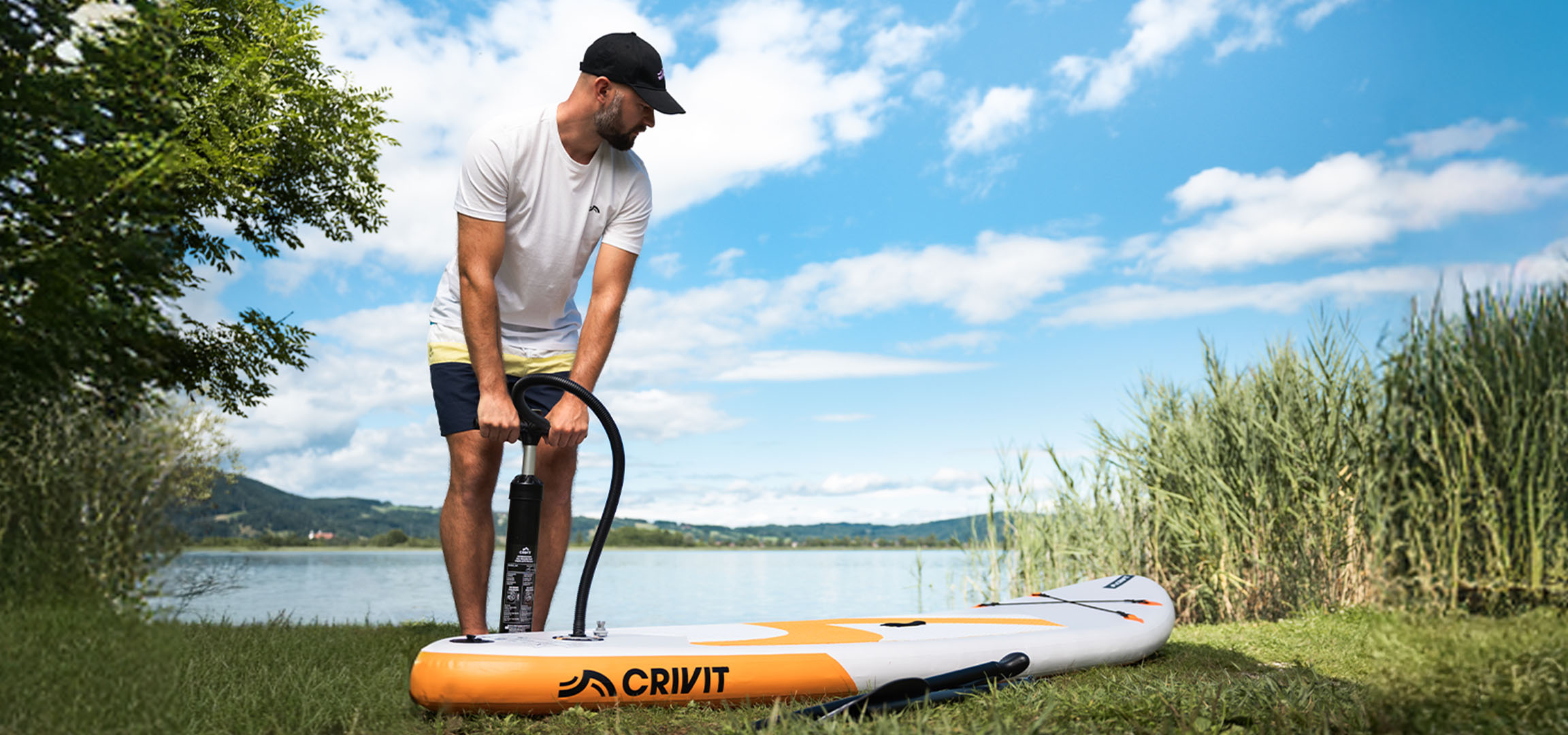
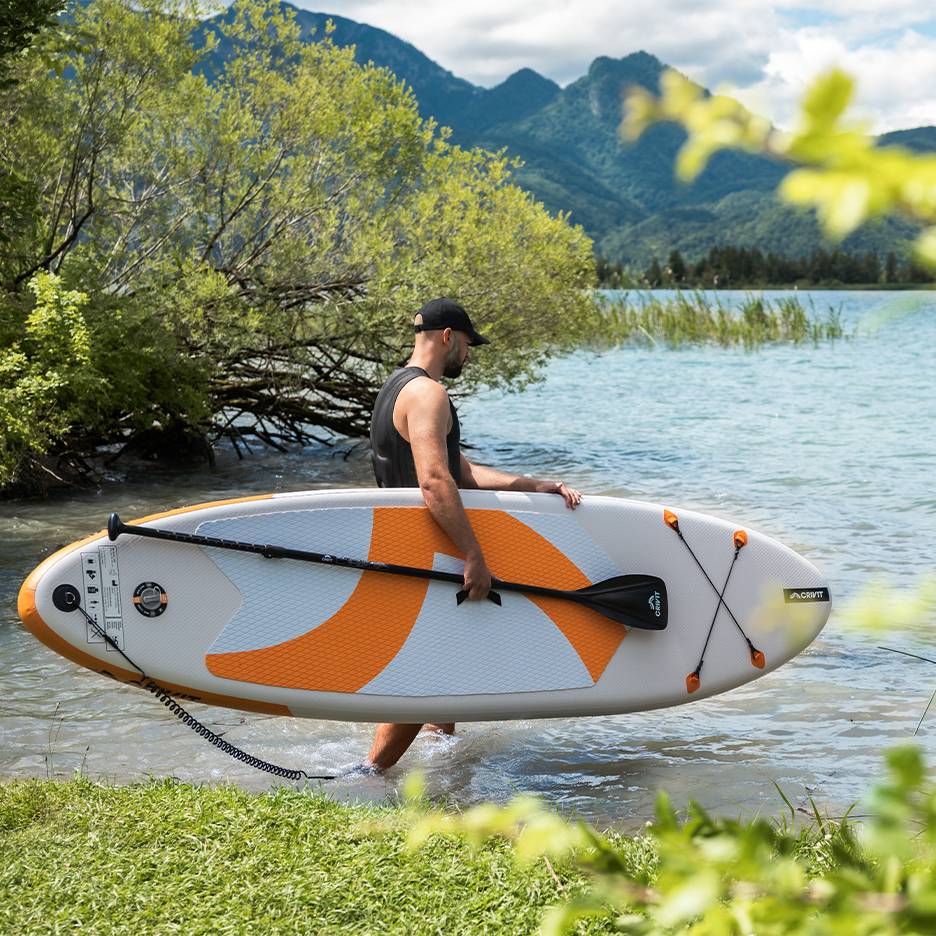
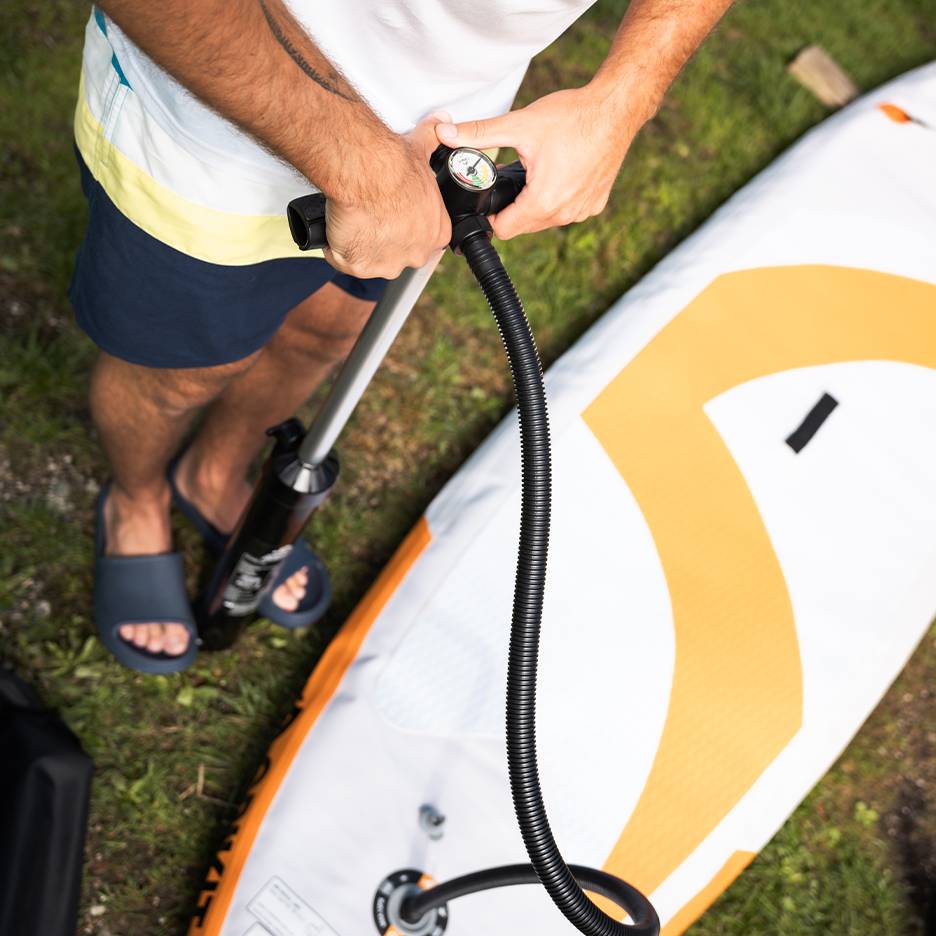
"Especially when you start SUP, you need a board that gives you one thing above all else: Stability," says Valentin. The expert recommends a wider all-round board that is between 3 and 3 1/2 metres long and has a high volume. "This ensures that you're safe in the water, even if the conditions are choppy." You should also look out for a non-slip surface—a so-called EVA deck pad. "Most beginner boards have this as standard these days. Your balance is the be-all and end-all when stand-up paddling. The better your feet grip, the more securely you stand—and the easier it is to get started." Important tip from the pro: "Make sure you check the air pressure. A soft board makes learning really difficult." You should inflate your board to around 15 PSI.
The Right Paddle
To make progress, you also need a paddle, which is always part of the SUP beginner's equipment. "Adjust the paddle so that it is around 15 to 20 centimetres above your body height," explains the professional SUP surfer. "This is the optimum height for paddling powerfully and efficiently while being easy on the joints."
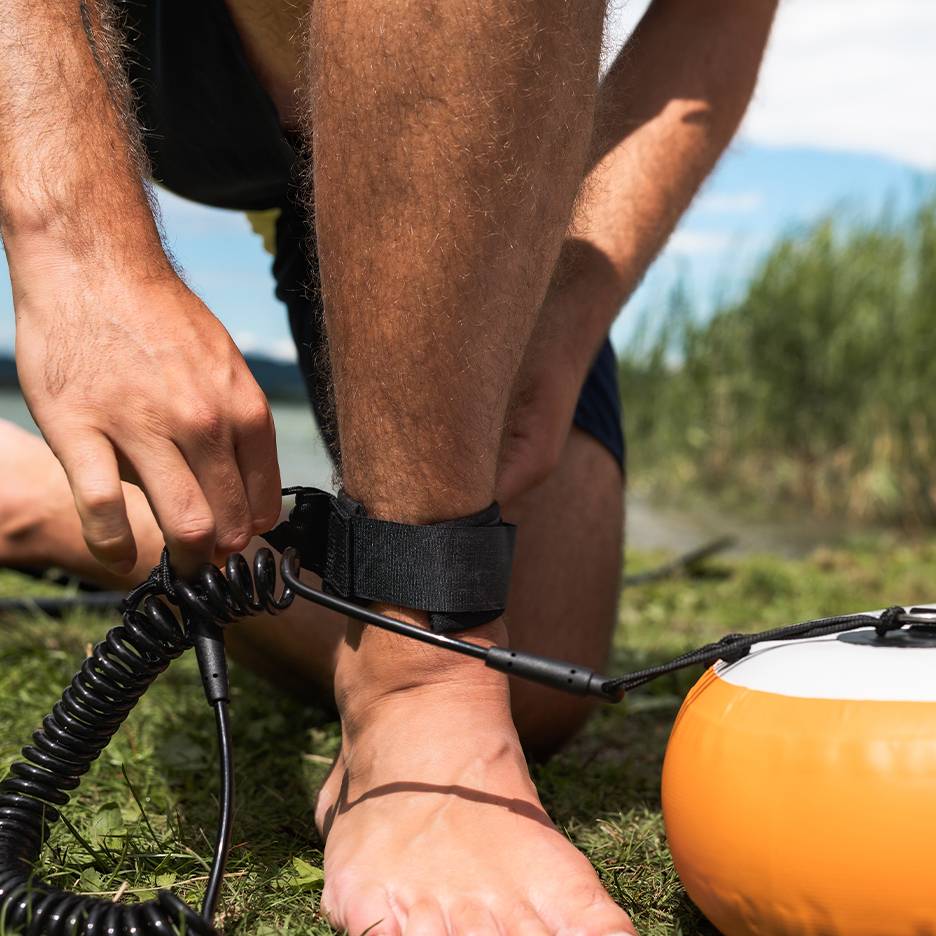
The Safety Leash
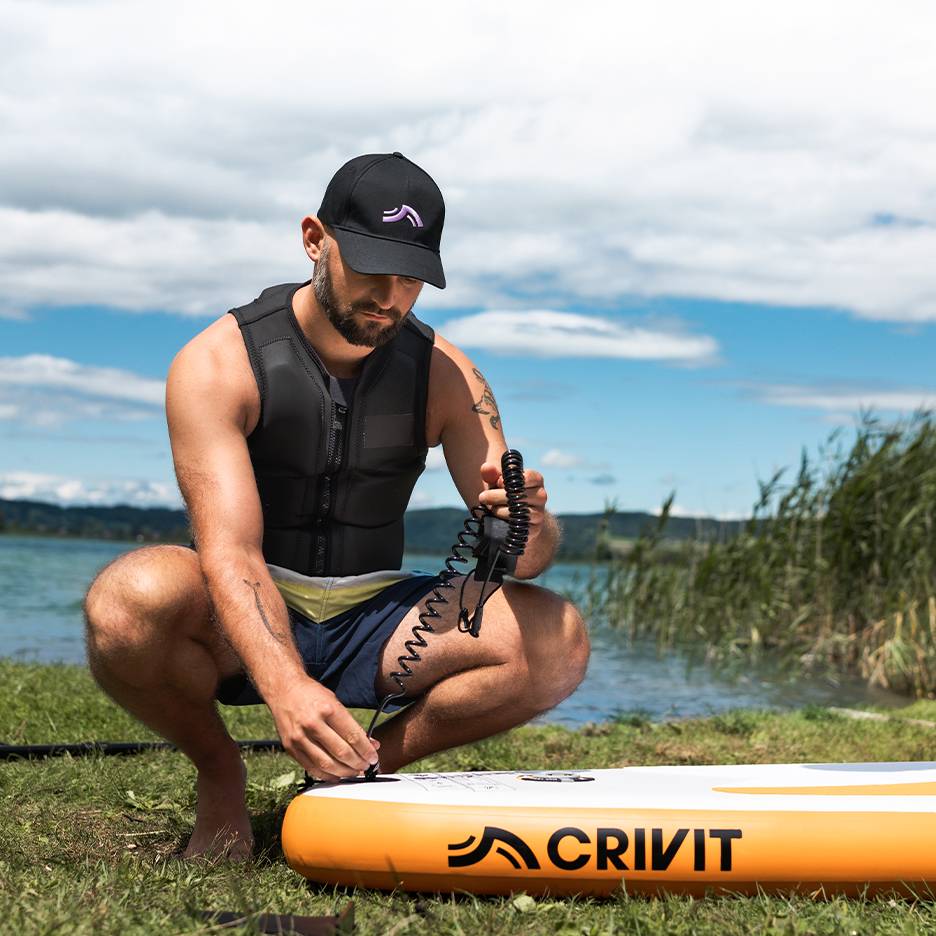
"Safety first," emphasises Valentin. That's why a leash is an absolute must—especially on open waters. The leash connects your leg to the board. "So you always stay connected to your board. Even if you fall into the water."
5 Tips for SUP Beginners
As a SUP beginner, you don't just need the right equipment. A little basic know-how about the right SUP technique will make it easier for you to get on the board and, above all, keep your balance. You should follow these tips for beginners:
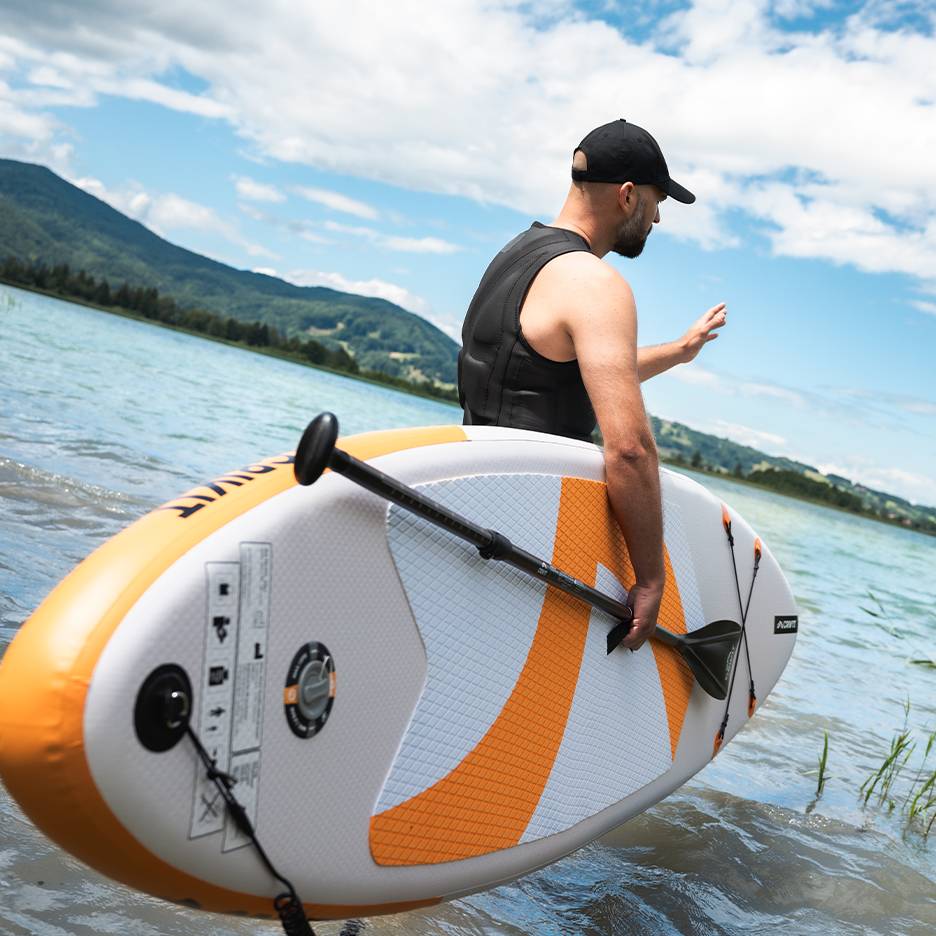
1. Start on Calm Waters
For starters, the calmer the water, the better. Swimming lakes or slow-flowing rivers without waves are ideal. This allows you to get used to the board and your balance without having to deal with wind or waves. "We can do without additional water movements," says Valentin. "They make everything unnecessarily difficult, especially when you're still trying to find your balance."
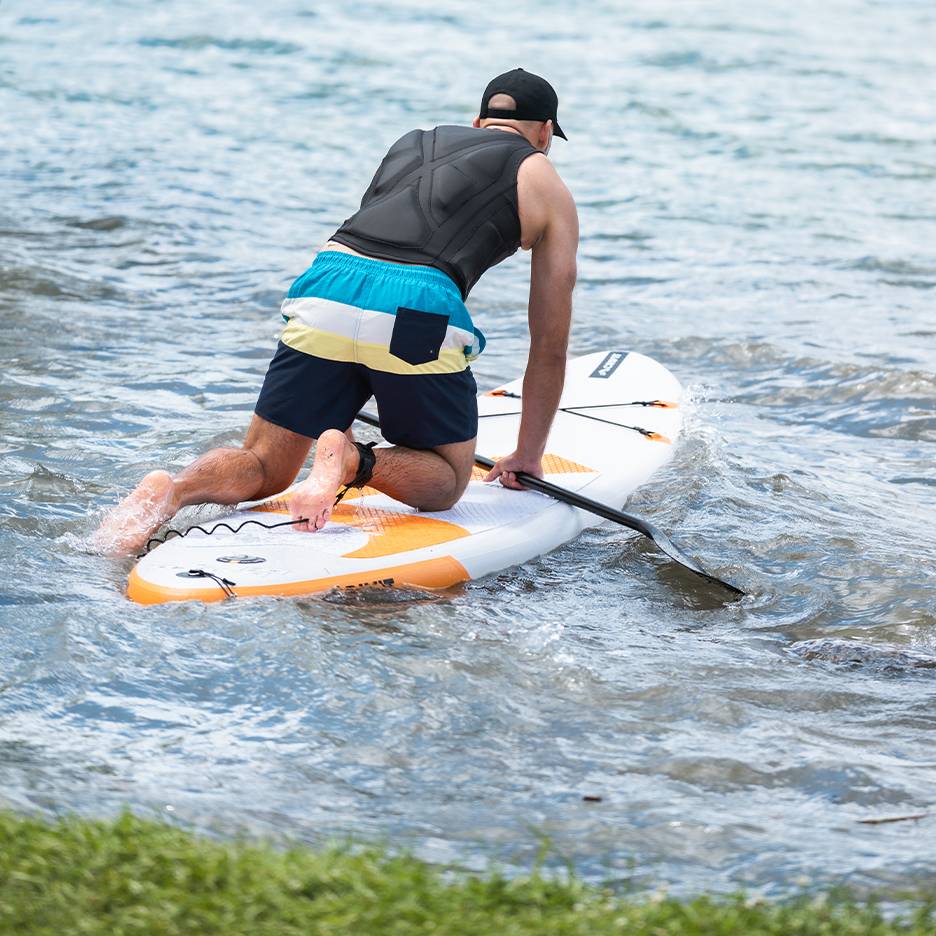
2. Get on Your Board in Shallow Water
The easiest way to get on the board: "It's best to get on from a shallow bank," explains the expert. "Place your board in the water so that the fin floats freely and doesn't touch the bottom. This prevents it from being damaged by stones or similar."
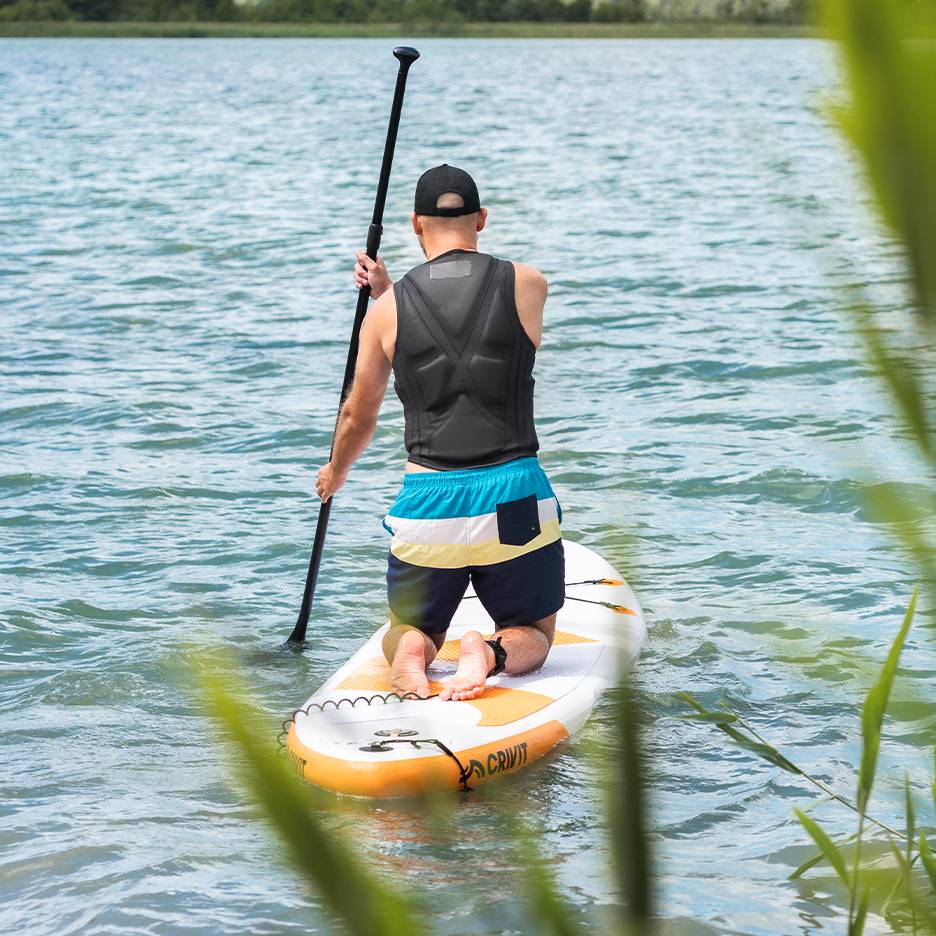
3. Set Yourself Up Slowly
Balance is the key. So take enough time at the beginning to get used to the water movement. "Stay on your knees at first," says Valentin. "When you're ready and feel confident, put your hands on the board. Then slowly straighten up with a lunge, one foot at a time."
4. The Right Stance on the SUP
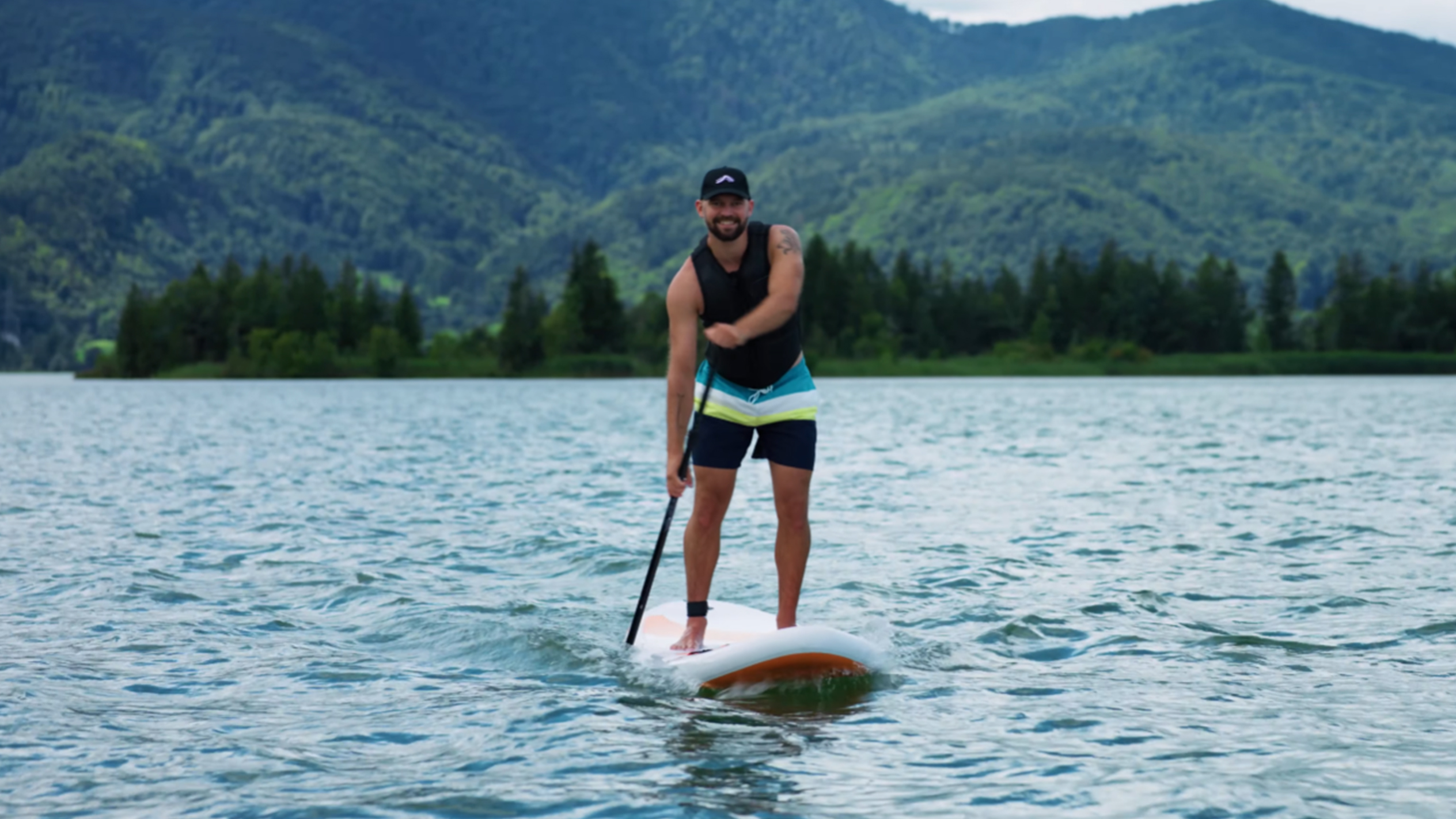
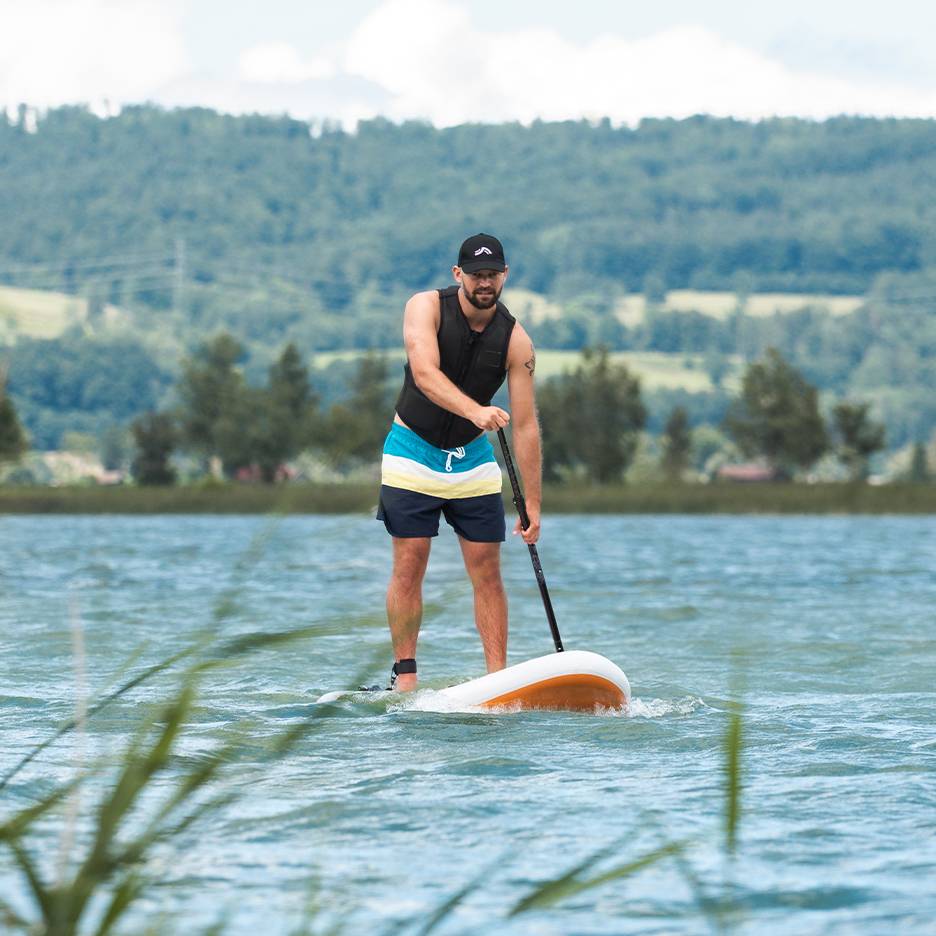
With the right SUP technique, it's easier to keep your balance. "Your feet should be parallel, about hip-width apart, directly above the handle." Valentin demonstrates: "Look forwards, not down at the board. Keep your knees slightly bent and your shoulders loose." This makes it easier for you to compensate for the movements of the water and stand more stable.
5. Don't Put Any Pressure on Yourself
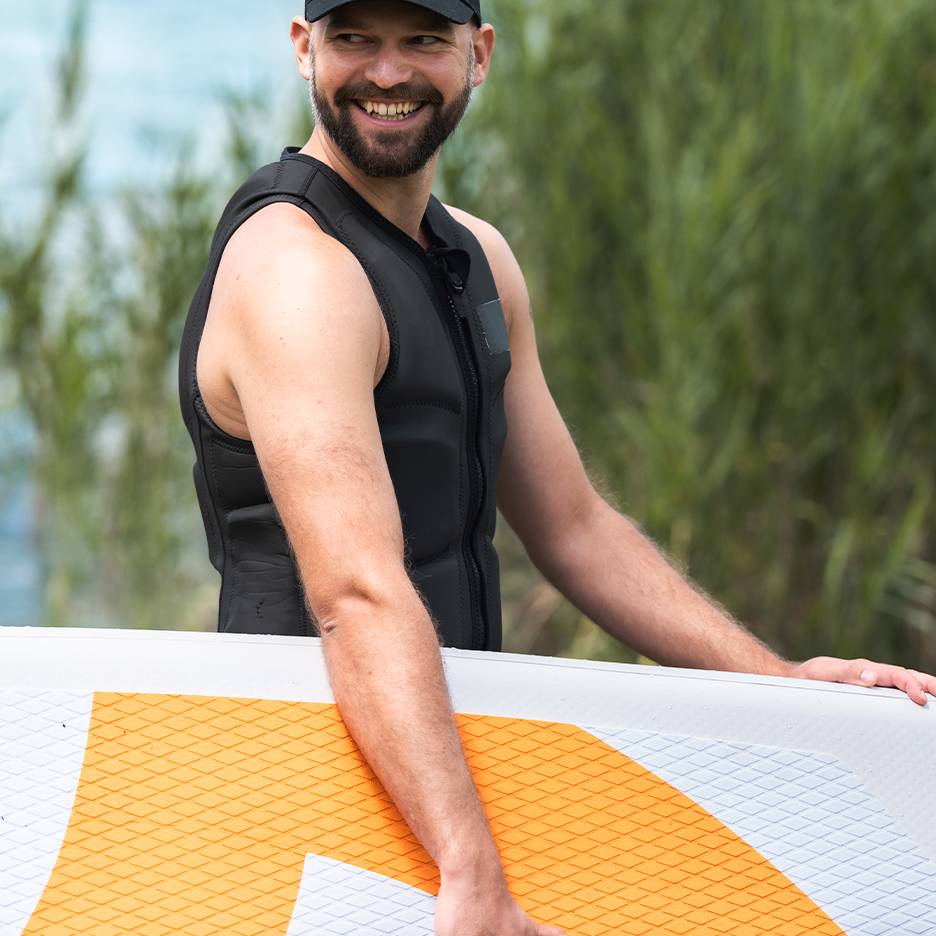
As a professional, Valentin knows only too well what role mental attitude plays. "My tip: don't put any pressure on yourself: SUP is not a competition. Take the time to develop a feel for your board." Mental pressure makes everything more difficult. Instead, the expert emphasises: "Keeping calm is the most important thing."
How to Get Started with SUP
Stand-up paddling is the perfect mix of exercise, experiencing nature, and relaxation—and is ideal for beginners to quickly gain their first experience of success on the water. With the right SUP board, paddle, and the right technique, you can get started straight away. Make sure the conditions are calm, your posture is stable, and you improve step by step—without any pressure. Whether for fitness, adventure, or simply a relaxing time on the water: SUP is versatile, easy on the joints, and suitable for all ages. If you follow these 5 tips for beginners, your first tour is guaranteed to be a complete success. So: get on the board, paddle in hand—and discover the world from the water!

Profile of Water Sports Expert Valentin
Name: Valentin Illichmann
Age: 26 years old
Profession: Professional SUP Surfer
Sports background:
- 2017: German SUP champion
- 2. Place at the European White Water Championships
- Has now established himself at the top of the world through many national and international competitions
This is what makes Valentin special: Valentin's passion is water sports. He enjoys SUP, kayaking, and snorkelling. Thanks to his many successful competitions, he has made a name for himself both nationally and internationally in the scene.