

Winter adventures with kids demand the perfect gear.
From Snowball fights and sliding around to taking a running jump through puddles, the world becomes an extra-large adventure playground in the cold season. To ensure your little ones can romp around without a worry, their clothing needs to be weather and winter-proof. Below you can find out how to master the perfect winter layering system.
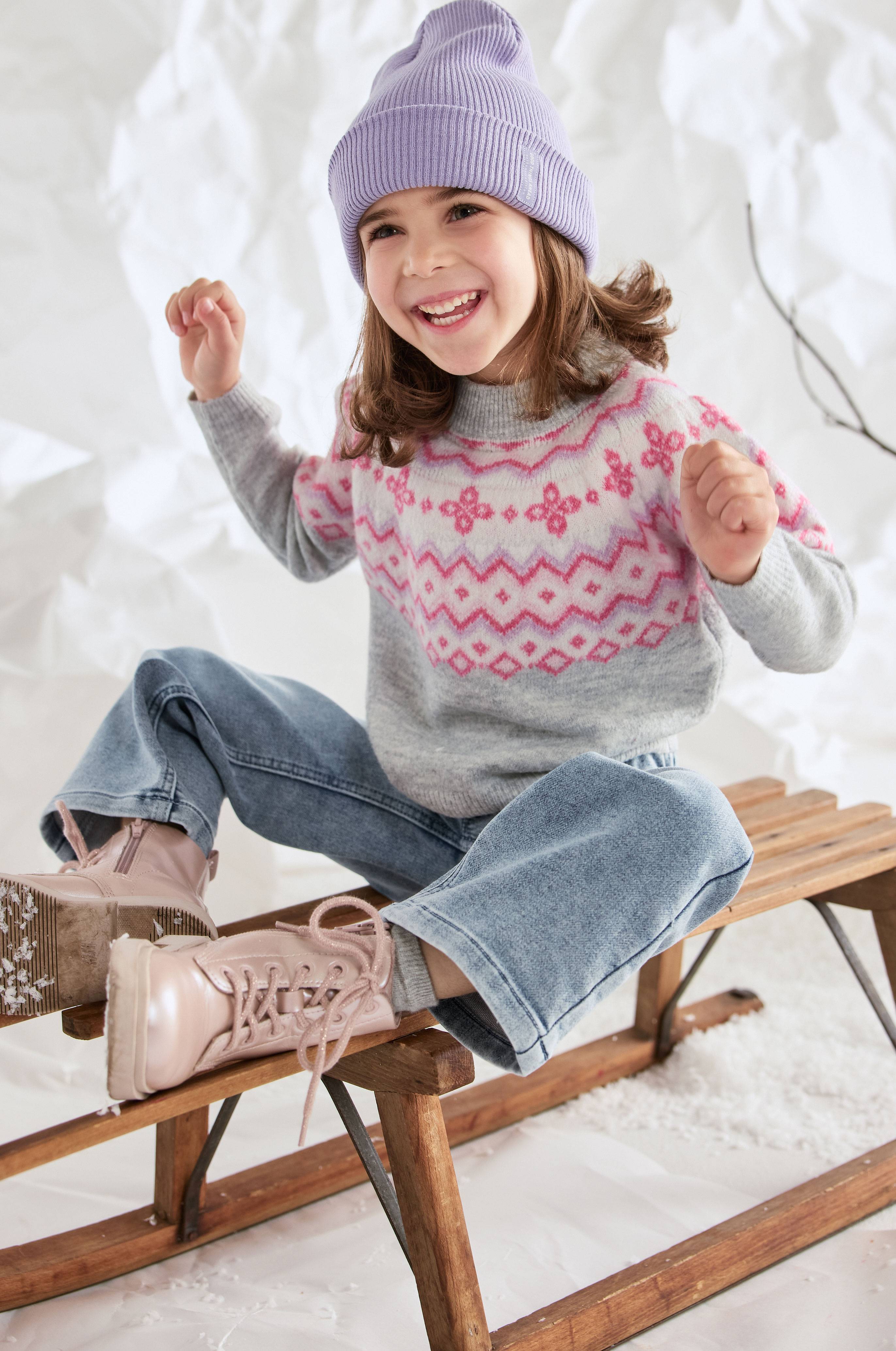
Master the “Onion Look” Layering System!
Whether you're dressing a toddler or a teen, the onion look is the most effective strategy for a truly winter-proof day. Each layer has a specific function: the first layer forms a thermal cushion and sits directly on the skin, wicking away moisture. Intermediate layers provide essential insulation and warmth. The top layer prevents water or wind from penetrating.
Remember the rule: the innermost layer must prioritise breathability and moisture-wicking to keep skin dry. The outer layer must be entirely waterproof and windproof, providing the ultimate defence against the elements.
For the ideal combination for little adventurers, focus on: Technical thermal underwear (avoid cotton!), a cosy insulating mid-layer, and waterproof/windproof trousers and jacket.

Cracking the Outdoor Gear Code
You can easily determine the functionality of water- or wind-repellent outdoor clothing before you buy it by understanding a few key terms.
For example, look for the Water Column (measured in mm). This indicates exactly how much water pressure a fabric can resist before moisture penetrates. High values mean more protection; a rating of 10,000 mm or higher means even a heavy downpour is not a challenge.
Terms like water-repellent offer only light protection. True waterproof clothing (which keeps out all moisture) is identified by key features such as fully taped seams, a concealed zip, and snug-fitting cuffs. Windproof materials prevent cold air from penetrating the garment, keeping the insulating layers effective.
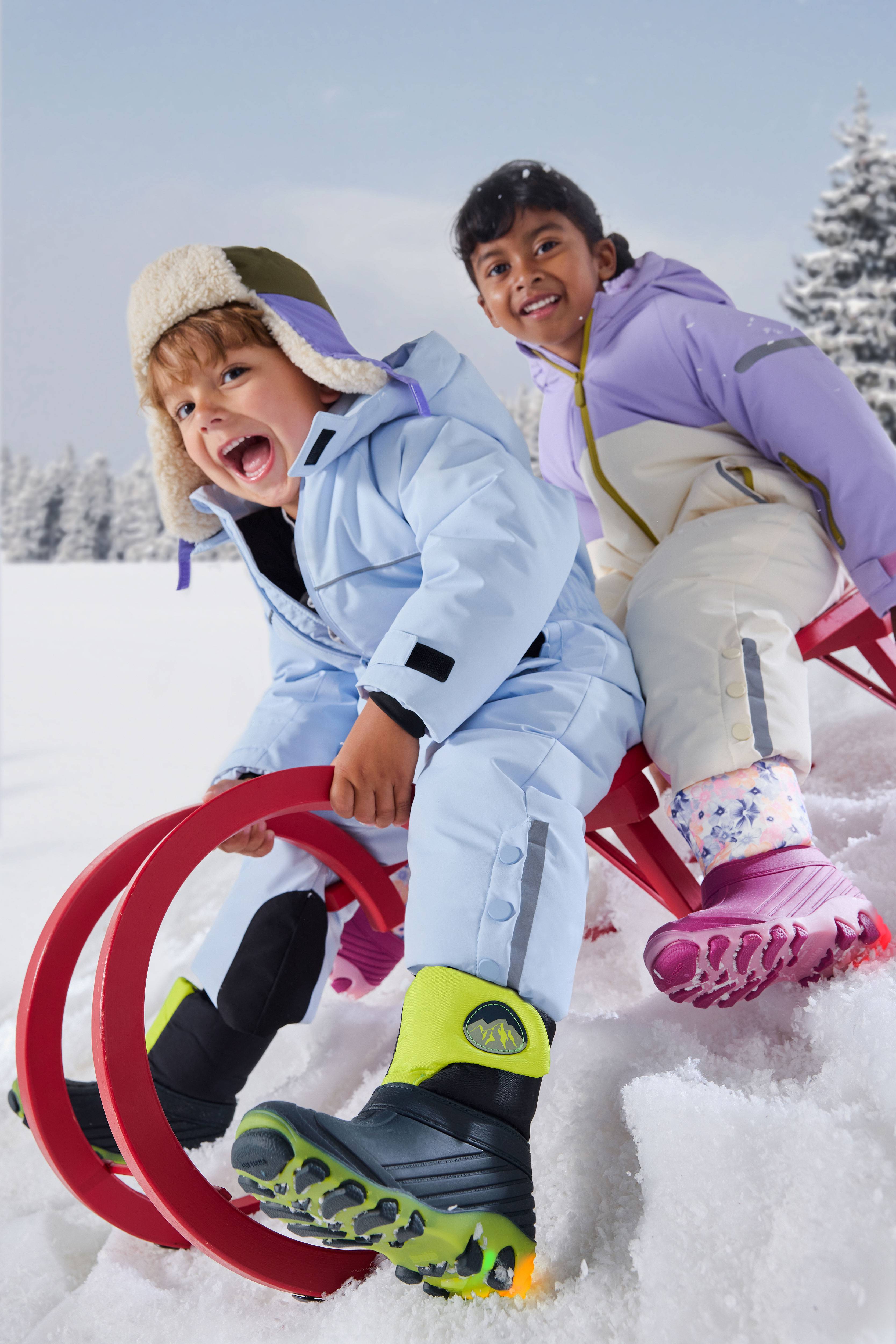
No chance of cold feet!
Perfect winter shoes for children must be excellently lined, feature a fully waterproof outer layer, and, most importantly, have a non-slip sole for safety on icy or wet surfaces. When buying, remember that the toes need enough room, especially if your child is wearing extra-thick cosy socks.
Of course, a hat, scarf, and gloves (or mittens for younger children) are essential accessories. We recommend tubular scarves or multifunctional scarves, as these are safer and won't slip or constrict like traditional scarves. Younger children usually feel most comfortable in mittens.
Extra Tip for Longevity: To ensure winter clothing for children between 2 and 8 years old lasts for more than one season, look for features like elasticated cuffs and stretchy materials that allow for growth.
Hibernation for Outdoor Clothing
To ensure that functional gear lasts a long time, always wash it at low temperatures and never use fabric softener (it clogs the pores of the technical membrane). Regularly re-waterproof your textiles (via spray or wash-in product) to prolong their water protection. When spring arrives, store winter clothing in a dust and moisture-proof place. Avoid tight, airtight plastic containers or bags; functional fabrics need to "breathe" to prevent mildew and maintain integrity.
